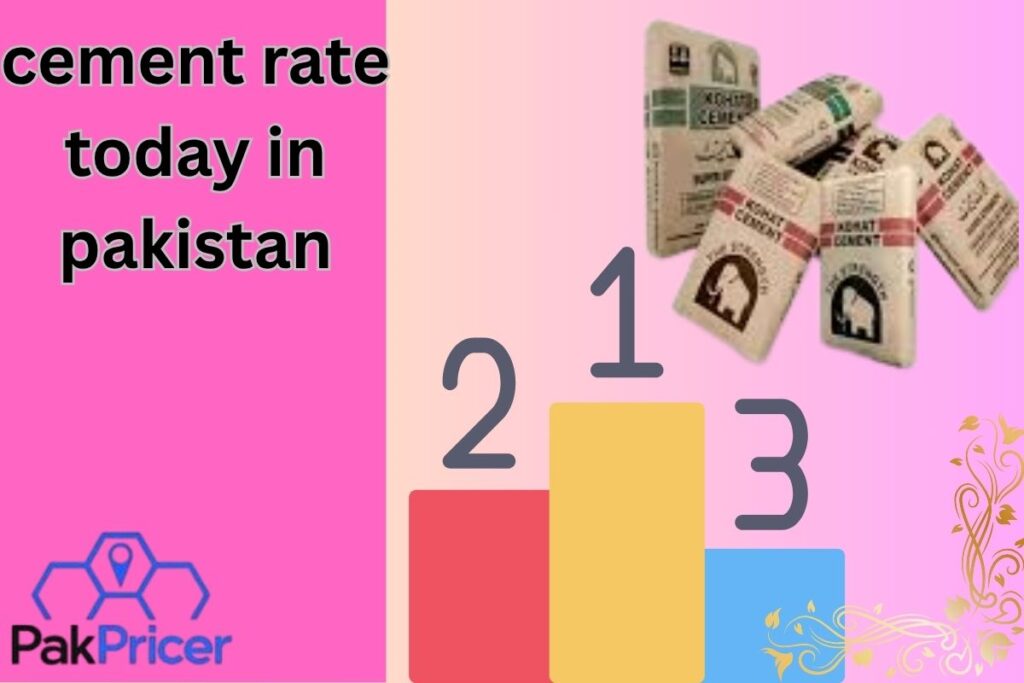
Stay informed with the latest updates on cement prices in Pakistan for 2026. This detailed guide provides the current rates for White Cement, 53 Grade Cement, and other cement products from the leading manufacturers in the country. If you’re planning a construction project or building your dream home, understanding the prevailing market prices is essential.
53-Grade Cement Prices in pakistan
Here are the latest prices for 53-Grade Cement from some of Pakistan’s major manufacturers:
53-Grade Cement Prices in pakistan
Here are the latest prices for 53-Grade Cement from some of Pakistan’s major manufacturers:
| Company | Price per 50kg Bag (Rs.) |
|---|
| BestWay Cement | Rs. 1,475 – 1,485 |
| Pakcem Cement | Rs. 1,500 – 1,510 |
| DG Khan Cement | Rs. 1,485 – 1,495 |
| Fauji Cement | Rs. 1,460 – 1,470 |
| Lucky Cement | Rs. 1,455 – 1,465 |
| Kohat Cement | Rs. 1,440 – 1,450 |
| Cherat Cement | Rs. 1,435 – 1,445 |
| Maple Leaf Cement | Rs. 1,495 – 1,505 |
| Power Cement | Rs. 1,440 – 1,450 |
| Askari Cement | Rs. 1,455 – 1,465 |
| Pioneer Cement | Rs. 1,465 – 1,475 |
| Paidar Cement | Rs. 1,440 – 1,450 |
| Falcon Cement | Rs. 1,435 – 1,445 |
| Flying Pakistan Cement | Rs. 1,390 – 1,400 |
The latest price of white cement in Pakistan
| Company | Price per 40kg Bag (Rs.) |
|---|
| Maple Leaf White Cement | Rs. 2,250 – 2,350 |
| Kohat White Cement | Rs. 2,150 – 2,200 |
e than grey cement due to the manufacturing process and raw materials used, but it’s essential for aesthetic construction needs.
Other Ordinary or Special Types of Cement available in Pakistan
Other Types of Cement in Pakistan: There are also some other types of cement available in Pakistan. Here’s a quick rundown on some of the other strains:
Ordinary Portland Cement (OPC)
OPC is the most commonly used type of cement. It can be used to construct residential buildings, roads and other engineering projects. The existing price for OPC (50kg)is usually between Rs.1,300- 1400 in general from manufacturer to region.
Sulphate Resistant Cement (SRC)
SRC Cement is designed to be used in work where the risk of sulphates are kept at a high level such as coastal areas, or sites with high groundwater sulphate contents. The rate of SRC ranges from Rs. 1,450 to Rs. 1,550 for a 50kg bag on the basis of brand.
Portland Pozzolana Cement (PPC)
PPC is produced by mixing Portland Cement with pozzolanic materials. It is employed in the construction industry where low heat of hydration is needed. It costs between Rs 1,350 and 1,400 per 50kg.
Issues In the Market and Cement Prices Unreality
Cement Rate Fluctuations In Pakistan price changes have been seen in the cement industry over the past few years. Key driving factors include:
Raw material prices The cost of raw materials such as limestone, clay, and gypsum are the single biggest factor that affects cement pricing. When raw material prices go up, cement makers tend to pass on the cost increase to the end customers.
Cost of Energy: Cement making is energy intensive industry as the process in this industry needs lot of fuel and electricity. Higher energy prices can contribute to increase in cement price also.
Demand vs Supply: Cement rates are highly affected by demand & supply aspects. Cement prices also have shot up in high-demand periods, including the annual peak of construction season.
Cost of Transportation: Transport is a major component in the cost of cement. Prices can rise based on the cost of fuel and logistical challenges — especially in areas with challenging terrain.
Regional Cement Price Variations
Cement prices also differ based on region. Prices are generally lower near the cement plants, because of less transportation. In contrast, cement costs may be higher in more distant areas because of transportation and handling expenses.
For instance, the price of cement in metro cities such as Lahore, Karachi and Islamabad would be relatively lower as compared to remote locations or smaller towns where it would need to cover longer distances. Furthermore, there are also seasonal influences to price changes, for example prices are generally higher in summer since there will be more construction.
Sustainability in Cement Production
In recent years the global sustainability drive has begun influencing the cement sector. Producers are adopting more green practices – like cutting carbon emissions and using new raw materials – in making cement.
Some of the manufacturers in Pakistan have started to look for more environmentally friendly production processes such as using waste materials (e.g., blast furnace slag, fly ash) as raw materials to manufacture cement and blended cements with lower environmental impact. This trend is likely to continue as the world focuses on lowering the carbon footprint of industries including those involved in cement manufacturing.
Let’s see what experts say about the cement industry of Pakistan
According to the experts, the cement demand in Pakistan will be even greater than second tier companies can handle in the near future due to growth in infrastructure development, urbanization and housing projects. But they add a note of caution that the sector has to grapple with issues like escalating rates of raw material, energy prices and even competition from imported cement.
Some experts say prices may vary further according to the market and the country’s economy. But they forecast continued, steady demand for cement in the long run because of development work that is still being done.
FAQs
Which company is the largest cement producer in Pakistan?
D.G. Cement Limited, part of the Nishat Group, is the largest cement producer in Pakistan, with a production capacity reaching millions of tons annually. The company’s plants are strategically located in cities such as Lahore and Karachi, ensuring a widespread distribution network across the country.
What are the leading cement brands in Pakistan?
BestWay Cement, Fauji Cement, and Lucky Cement are the top three cement brands, recognized for their exceptional quality and reliability in the construction industry.
What are the most commonly used types of cement in Pakistan?
Pakistan primarily uses three types of cement: Ordinary Portland Cement (OPC), Sulphate Resistant Cement (SRC), and White Cement, each serving different purposes in the construction sector.