8 KW Solar System Price in Pakistan 2026 – Updated Cost, Breakdown & Benefits
Introduction:
Pakistan still grapples with increasing electricity rates, load-shedding and an overburdened national grid. With energy prices continuing to rise, there is an increasing number of property owners who are looking for a sustainable and cost-effective solution. The viability and sustainability of solar power is now clear; free from the vagrancies of grid shortages, while effectively shaving dollars of monthly bills.
Fast forward to 2026, with the development of photovoltaic technology, efficient inverters, and widespread adoption of net-metering policies; now becomes one of those periods when solar power systems are actually attainable for me. As one of the most prevalent system sizes, 8 kilowatt (kW) solar systems have been around a while and continue to be an attractive option for homeowners and small businesses. It provides sufficient power capacity to support the daily electric needs, enabling you to save more money over time.
FriendzliNote: This post covers a comprehensive analysis of the 8kw solar system price in Pakistan in 2026, System components prices, performance expectation from the system Benefits and guidance on how you can decide whether an 8KW Solar system is perfect for your energy need.
What Is an 8 KW Solar System?
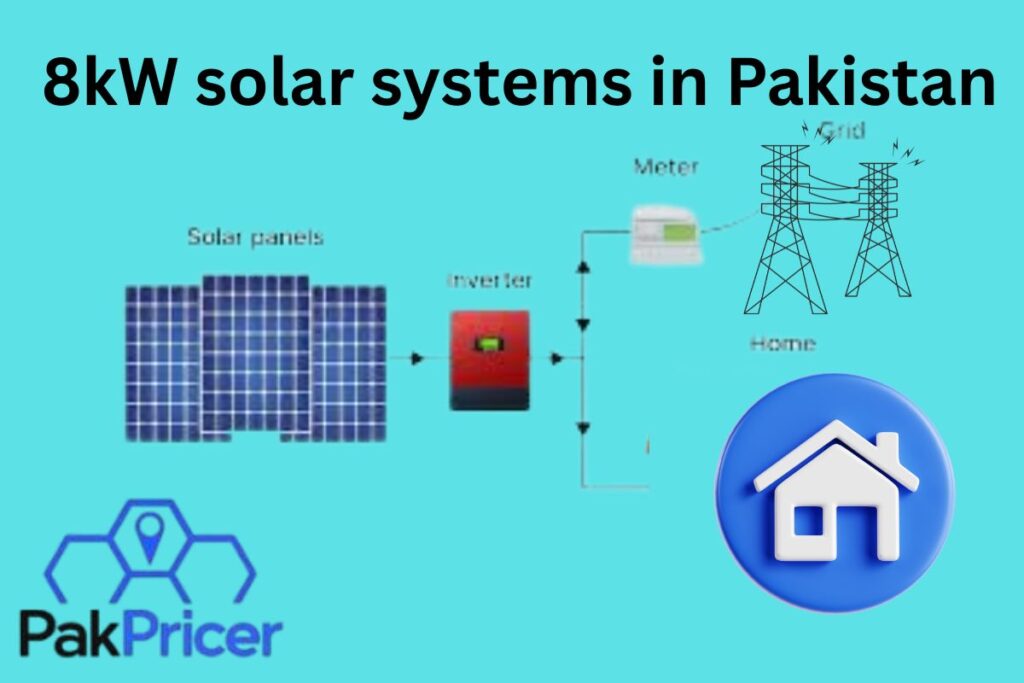
The 8kW solar installation is a type of grid-tied or hybrid photovoltaic system that produces 8000 watts under optimal sunlight conditions (in other words, when the sun is shining on all cells at full capacity). In Pakistan’s sunny weather, a system like that often yields 32 to 40 kilowatt hours (kWh) of electricity daily, depending upon the placement, quality and weather practices.
This volume is appropriate for:
Medium to large residential homes
Homes using multiple air conditioners
Small offices or shops
Clinics, schools, and workshops
A typical 8 kW system comprises of solar panels, an inverter, mounting frames, wiring and connections, protection devices and installation services. Most homeowners pair their systems with net-metering, which enables them to send excess electricity back into the national grid in exchange for billing credits.
8 KW Solar System Price Breakdown
The cost of an 8-kW solar array in Pakistan includes a number of the most essential components. Here’s the price breakdown on each element:
| Item | Description | Estimated Price (PKR) |
|---|---|---|
| Solar Panels | Tier-1 N-Type 575W–600W panels (14–15 panels) | 285,000 |
| Inverter | Hybrid or On-Grid 8kW Inverter (Inverex / Growatt / Huawei class) | 520,000 |
| Mounting Structure | Galvanized iron or aluminum rooftop structure | 135,000 |
| DC & AC Wiring | Premium copper wiring & conduits | 55,000 |
| Protection Equipment | DC isolators, AC breakers, surge protection | 45,000 |
| Earthing System | Grounding rods and safety wiring | 35,000 |
| Net Meter (Green Meter) | Three-phase bi-directional meter | 105,000 |
| Installation & Labor | Professional installation and testing | 65,000 |
| Transport & Logistics | Delivery and handling | 20,000 |
| Total Estimated Cost | 1,265,000 PKR |
The price of the installation usually ranges from 1200,000 to 1,500,000 PKR dependent upon the requirements of the project as well as the equipment employed, and the possibility of incentives from government.
8 KW Solar System Price in Pakistan – 2026 Updated House Experience
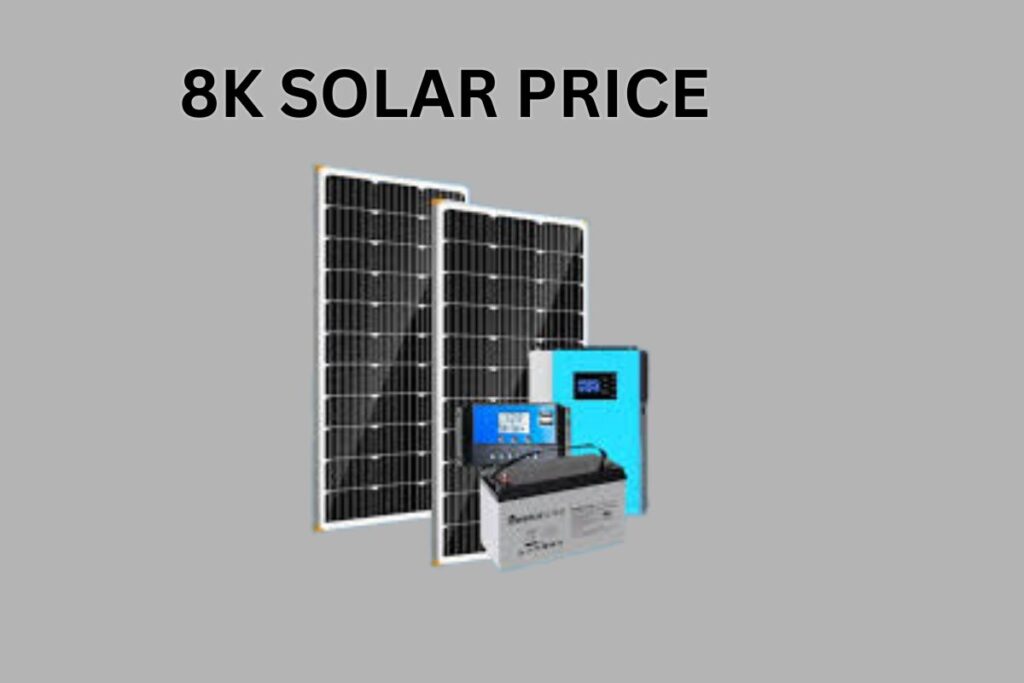
1. Sufficient Power Supply
As of early 2026 the prices for solar components have been stable after much market upheaval. The below estimate is a very real and practical discovery of cost for an on-grid or grid-tie 8kW solar system in Pakistan’s current energy structure!
ItemDescriptionEstimated Price (PKR)Solar PanelsTier-1 N-Type 575W–600W panels (14–15 panels)285,000InverterHybrid or On-Grid 8kW Inverter (Inverex / Growatt / Huawei class)520,000Mounting StructureGalvanized iron or aluminum rooftop structure135,000DC & AC WiringPremium copper wiring & conduits55,000Protection EquipmentDC isolators, AC breakers, surge protection45,000Earthing SystemGrounding rods and safety wiring35,000Net Meter (Green Meter)Three-phase bi-directional meter105,000Installation & LaborProfessional installation and testing65,000Transport & LogisticsDelivery and handling20,000Total Estimated Cost1,,265(0 PKR
Expected Market Range in 2026:
PKR 1,250,000 to PKR 1,550,000
Prices may fluctuate according to:
Brand selection
Roof structure type
City location
Hybrid vs on-grid inverter choice
Battery backup inclusion (if required)
Add an other PKR 350,000–700,000 in total cost for a lithium back up depending on storage size.
Government Net-Metering in 2026
Net-metering is still one of the greatest benefits for going solar in Pakistan. Under current 2026 policies:
If the grid is fed more electricity than it receives, you get credits on your bill.
Exports are offset against monthly consumption figures.
The payback period changes into a very attractive one, once net metering is enabled.
Those approval timelines have been streamlined in most large cities, and these days, most solar installers take care of the paperwork on behalf of their customers.
Advantages Of Having An 8 KW Solar System Installed
Major Reduction in Electricity Bills
For an 8 kW system, electricity expenses can be reduced between 70% to about 95%, depending on consumption and preference for using net metering. Most receive near-zero bills in the peak summer months.
Over the span of 25 years’ panel life-time, one can save a few million rupees and get to consider solar as thus best long-term investment.
Reliable Power Supply
The problem of load-shedding is not yet over. A solar system will provide you with power during the day, and uninterrupted electricity whenever the sun goes down (with optional battery backup).
Environmentally Friendly Energy
Solar energy is clean, sustainable and free of carbon. Agree, 8 KW product means that carbon can be reduced about 6~8 tons per year, due to contribution of healthier environment!
Protection Against Rising Tariffs
And Pakistan’s power prices have been going up every year. Solar power locks in the cost of your energy for up to decades, protecting you from future rate increases.
Increased Property Value
Properties in which the seller has invested in a solar-power system also fetch a better sale price, as buyers appreciate they will save money over the long-term.
Low Maintenance
Solar panels now are generally low-maintenance. With periodic cleaning and an annual inspection, the system maintains its efficiency.
Business Efficiency
It accounts for a high percentage of operating expenses for small businesses. Solar means power consuming machinery, lighting and air conditioning can run for a very low ongoing cost – boosting profit.
How Many Years Until the 2026 Payback?
The return on investment for an 8 kW system in Pakistan is:
3-4 years with net-metering
4 to 6 years no net-metering
The electricity produced after payback is effectively all free for the remaining system life of 20-25 years.”
Choosing the Right Equipment
When you go solar, the quality of your equipment makes a difference. For 2026, the majority of quality installers provide:
25-year performance warranty, 10 year manufacturer warranty with Muti-Ribbon cells and N-Type -Grade a highest rated Tier-1 solar panels
Hybrid or smart inverter with Wi-Fi monitors
Certified safety protections
Professional installation and after-sales support
Always request:
System design proposal
Warranty documentation
Net-metering support
Performance estimates
Is Battery Backup Necessary?
Battery storage is not obligatory but it helps when:
Your area faces frequent outages
You need night-time backup
You run sensitive equipment
That said, the financial returns through net-metering are also great without batteries.
Who Needs an 8 KW System Installed?
An 8kW solar system is perfect if you:
Consume 900–1,400 units per month
Have adequate roof-space (about 550-600 sq feet)
Want long-term savings
Want to learn more about getting off the grid
Own a home or business property
Common Mistakes to Avoid
Opting for sub par quality panels in an effort to save up front costs
By passing due earthing and surge protection
Hiring untrained installers
Not applying for net-metering
However, a professionally installed system is also guaranteed to be safe and long-lasting and deliver great returns.
This is an article logging some features of Solar energy in Pakistan.
Solar power is no longer simply an alternative — in 2026, it’s going to be the go-to. With advances in technology, a reduction in component costs and government support, the adoption of solar is likely to scale up even faster across all corners of the country.
By investing now, not only are you securing your energy future, you are playing a part in Pakistan’s journey towards sustainable power production.
Conclusion: Is an 8 KW Solar System Right for You?
An solar array that is 8 Kilowatts is a good investment taking into consideration for both business and residences in Pakistan that can provide energy security and save money over the long run. Not only is it the most environmentally friendly energy source, but also the most efficient but it also offers substantial financial advantages. If you decide to invest in solar energy today it will allow you to lower the price to power in the coming years and also help preserve the earth for generations to come.